
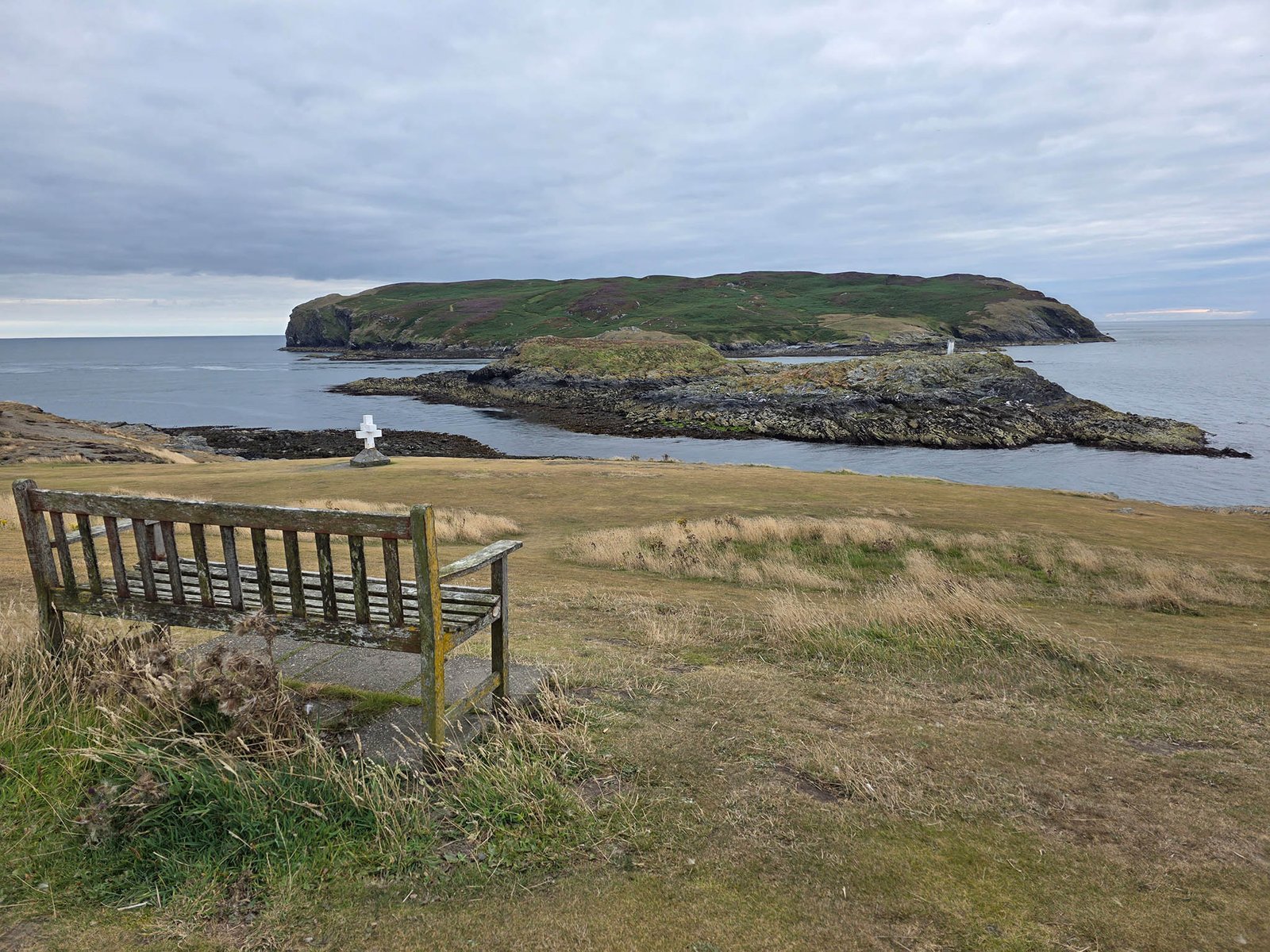
Here at Travellowdown, we had the pleasure of revisiting the wonderful Isle of Man, nearly a decade since we last set foot on the island. Here’s an account of how we got on…
“Make sure you say hello to the fairies when crossing Fairy Bridge.”
…stressed Bob, a ruddy-faced local we bumped into at The Sound Café, situated on the island’s southernmost tip.
Noticing us flipping through guidebooks, he surmised we weren’t local and wanted to enlighten us on Isle of Man’s rich folklore culture.
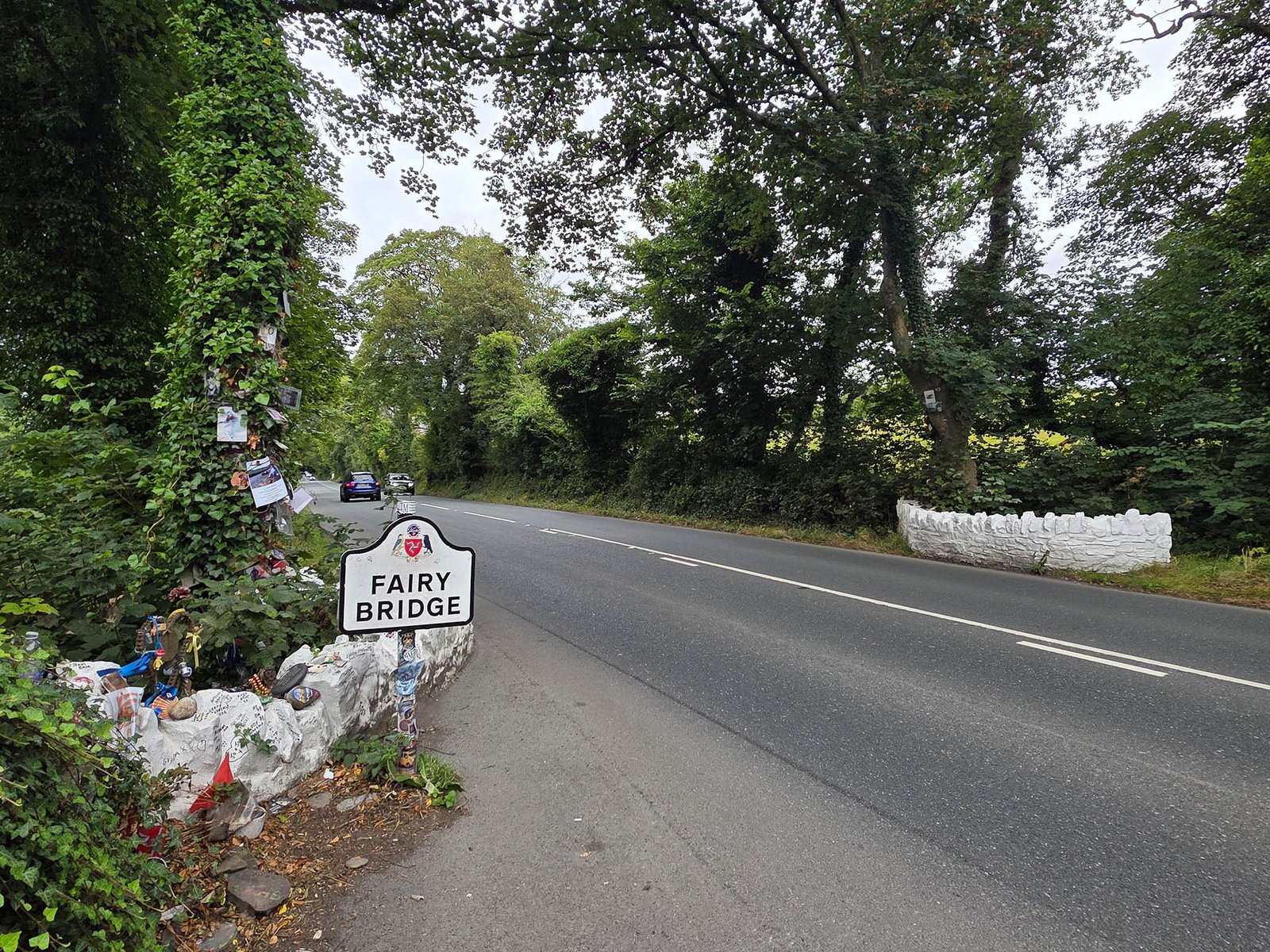
Fairy Bridge is a small, inconspicuous road bridge between Castletown and Douglas and, apparently, it’s considered bad luck not to greet the fairies as you cross.
“We’ll certainly remember to say ‘hello’,” I replied, before Bob continued his overview of the island’s intriguing superstitions.
“Many people won’t use the word ‘rat’,” he said, smiling. “Again, they think it’ll bring bad luck.”
Out of respect for this long-held custom, pop group The Boomtown Rats even changed their name to The Boomtown Longtails for one night when they performed here!
The Sound & Calf of Man
We could have chatted to Bob for hours but were keen to explore. Measuring just 33 miles by 13, this self-governing isle in the middle of the Irish Sea is ideal for a short break – like we’d booked – or even a longer holiday.
But before jumping in our hire car, we wanted to savour this spectacular location which would become my favourite spot on the island. Standing at its southerly edge, we stared across the narrow stretch of water to Calf of Man, a tiny islet owned by Manx National Heritage.
Suddenly, on the rocky coastline below, we noticed seals frolicking at the water’s edge. An information leaflet I was carrying described this area as one of the isle’s “most treasured places” and we’d agree with that.
But it was time to move on.
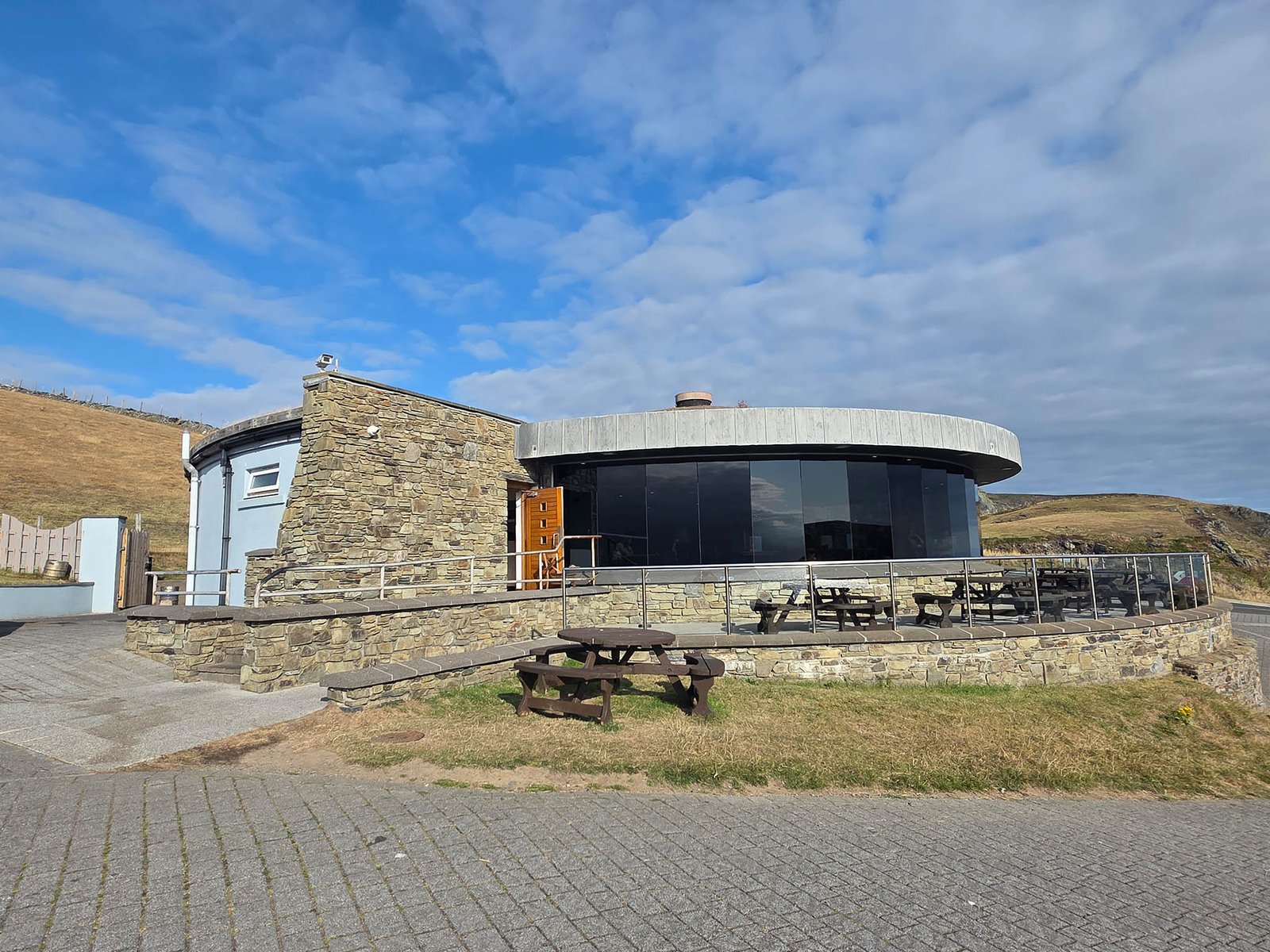
The Sound Café, where we met Bob.
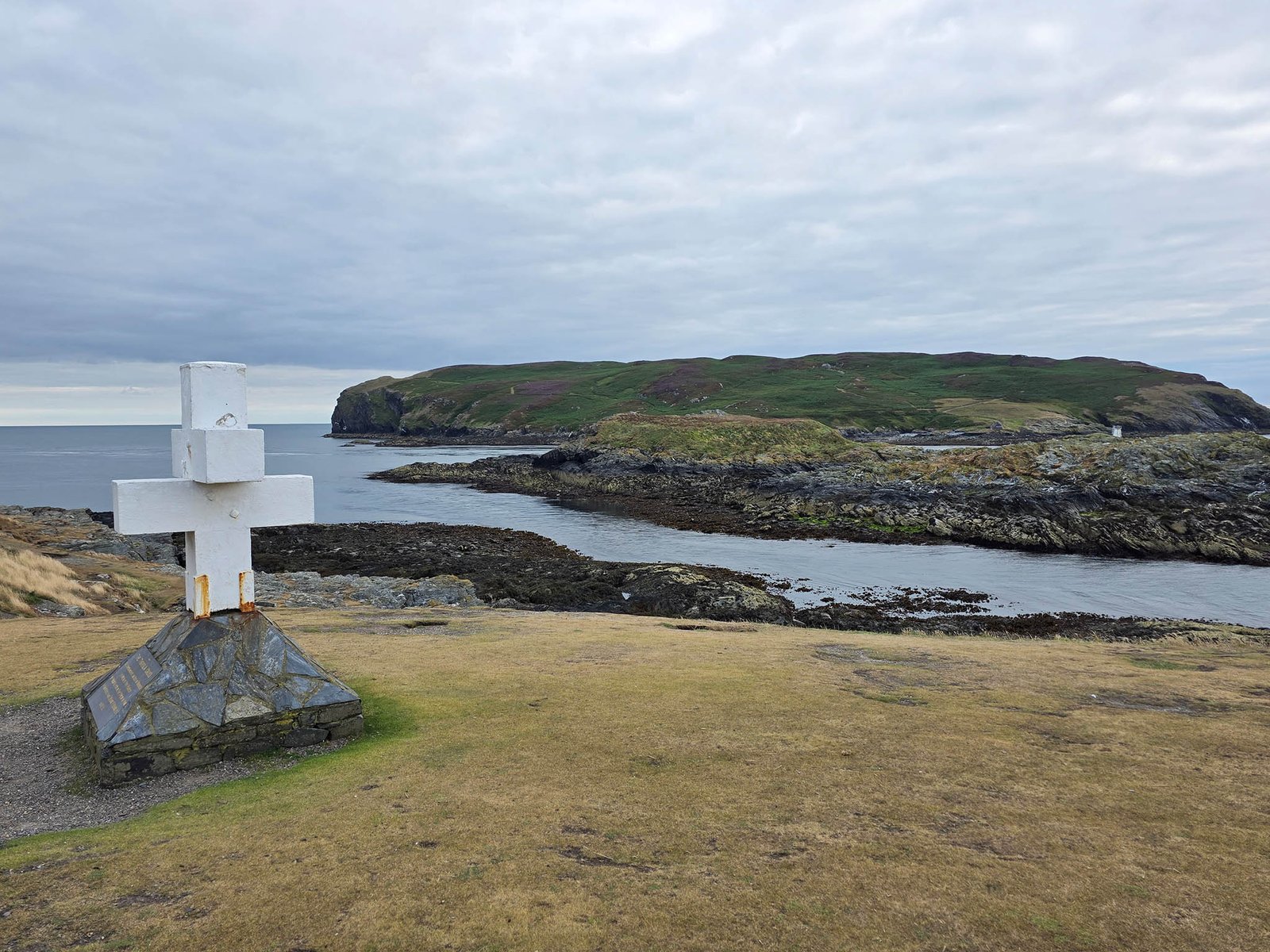
The rocky channel at The Sound.
INTERESTING FACT
Atlantic grey and common seals thrive in these waters, with an estimated 600 living here.
Castletown & Castle Rushen
First stop Castletown, former capital and home to Castle Rushen, among the British Isles’ best preserved medieval castles.
Over the centuries, it’s been used not only as a fortress and royal residence but a mint and prison, too, and its colourful history is explained via numerous information boards and displays.
The highlight for us was climbing the spiral staircases to the top of the castle for a panoramic view of the town.
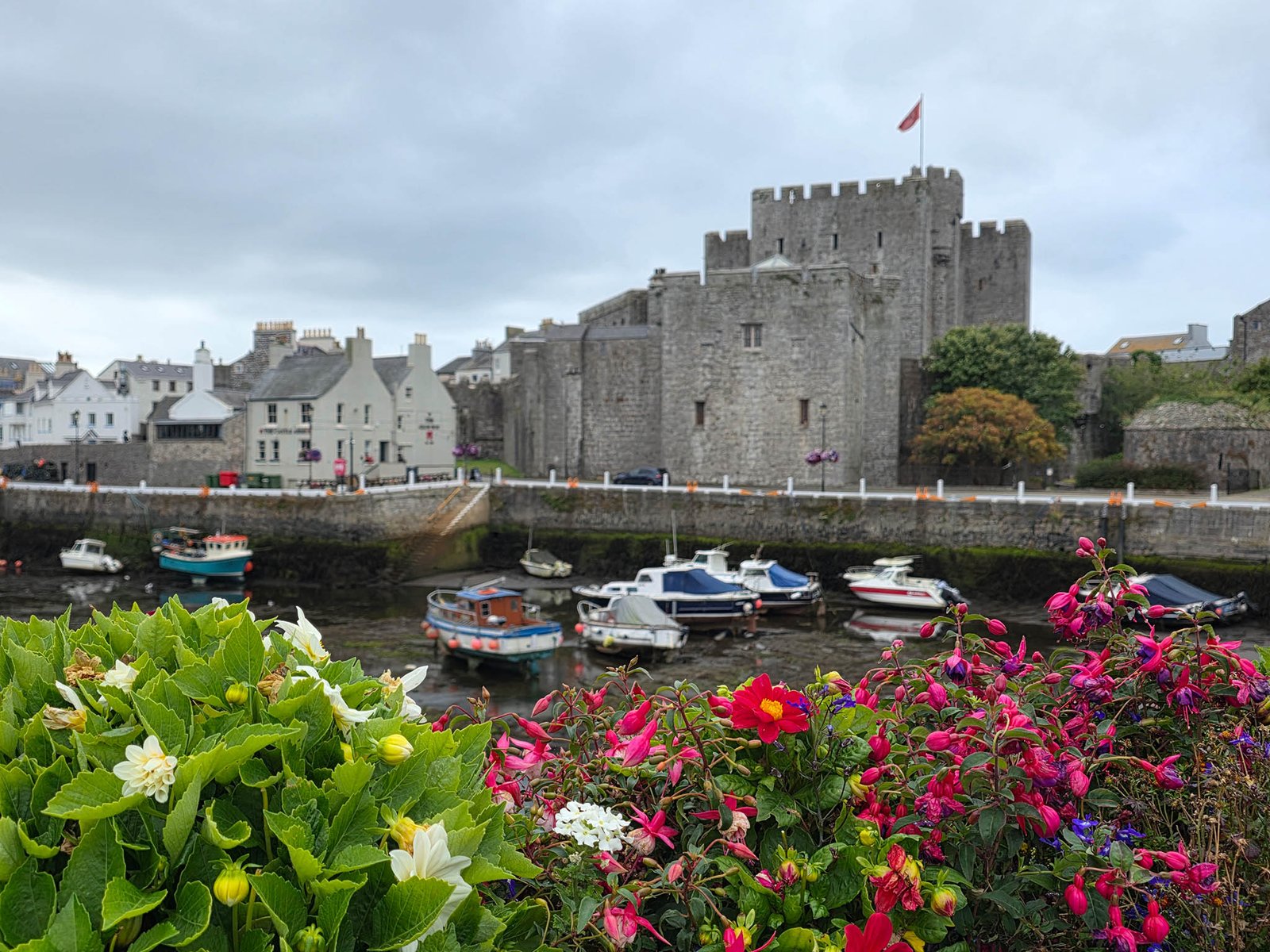
Castle Rushen towers over the harbour.
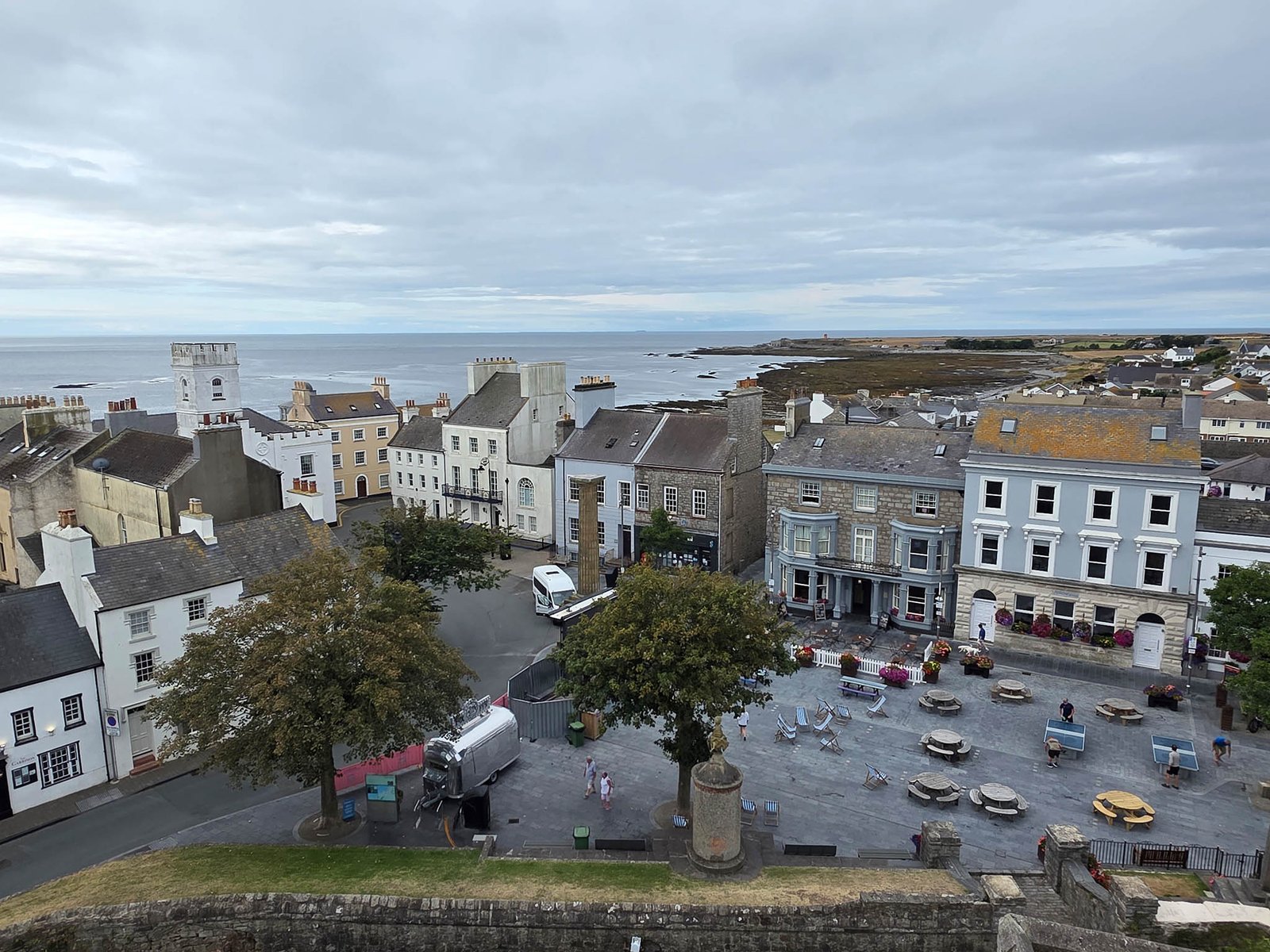
The view from the castle top.
INTERESTING FACT
Castletown relinquished its role as capital in 1869 when the parliament transferred to Douglas.
Fairy Bridge
Douglas, a vibrant town, was next on our itinerary. En route, though, we crossed Fairy Bridge so made sure we wished the fairies – or “the little people”, as many locals call them – well!
LOCAL TIP
It’s considered bad luck not to greet the fairies as you cross – a quick “hello” will do.
Douglas Promenade
Strolling along the promenade, we admired gardens bursting with colour and passed several statues, one depicting the much-loved comedy actor Norman Wisdom, who lived on the island, another of the equally popular Bee Gees, who were born in the town.
While we preferred stretching our legs, other visitors chose to hop on the world-famous horse tram which travels the length of the sea front. Passengers over the years have included the late Queen Elizabeth II and Princess Margaret.
At the end of the promenade is Derby Castle Terminus, where the horse tramways are based and electric trams head north. A throng of people were waiting for the next tram, many of whom would alight at Laxey to join the unique Snaefell Mountain Railway.
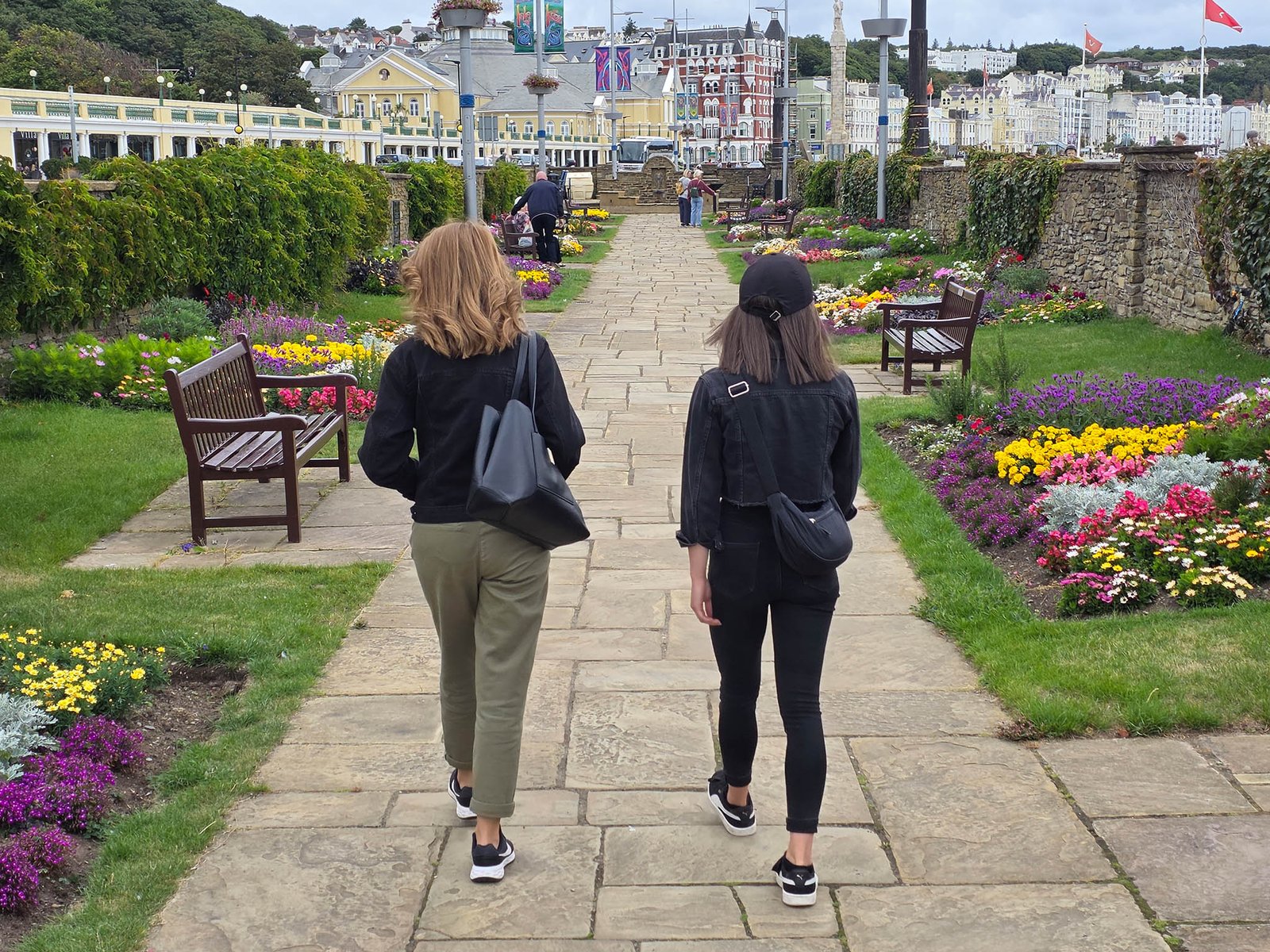
Promenade gardens in full bloom.
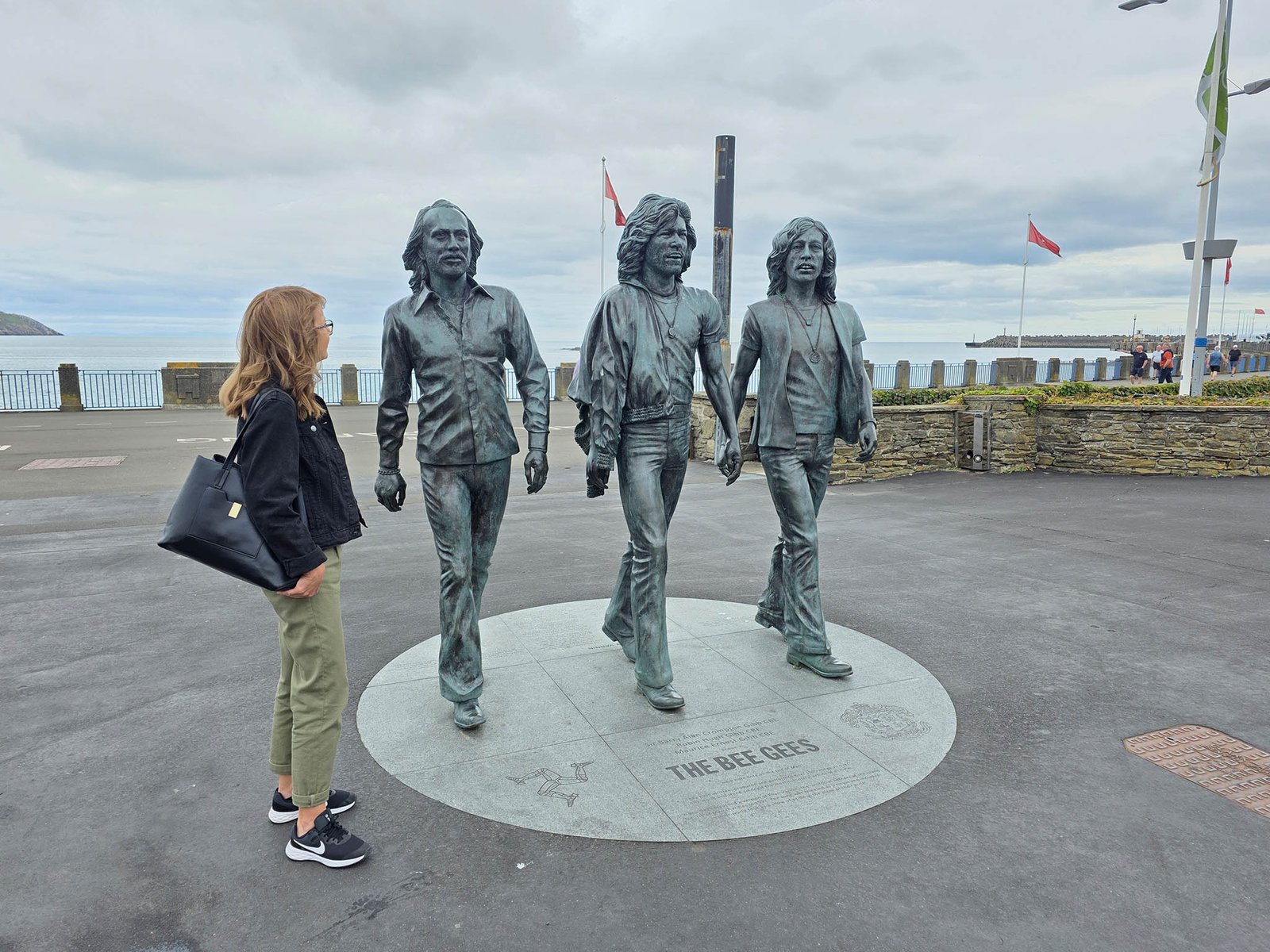
The Bee Gees, born in Douglas.
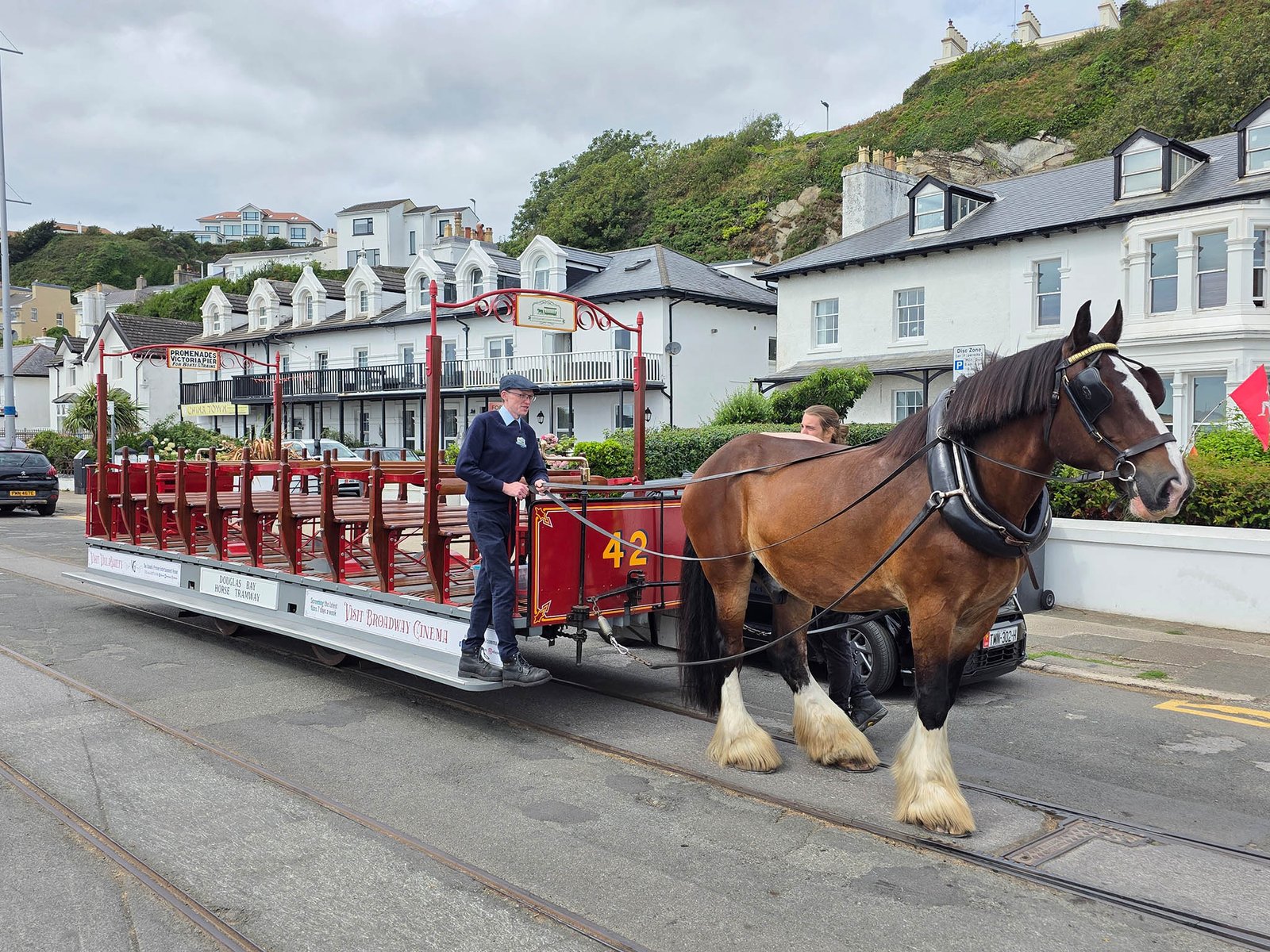
The Douglas Bay Horse Tramway.
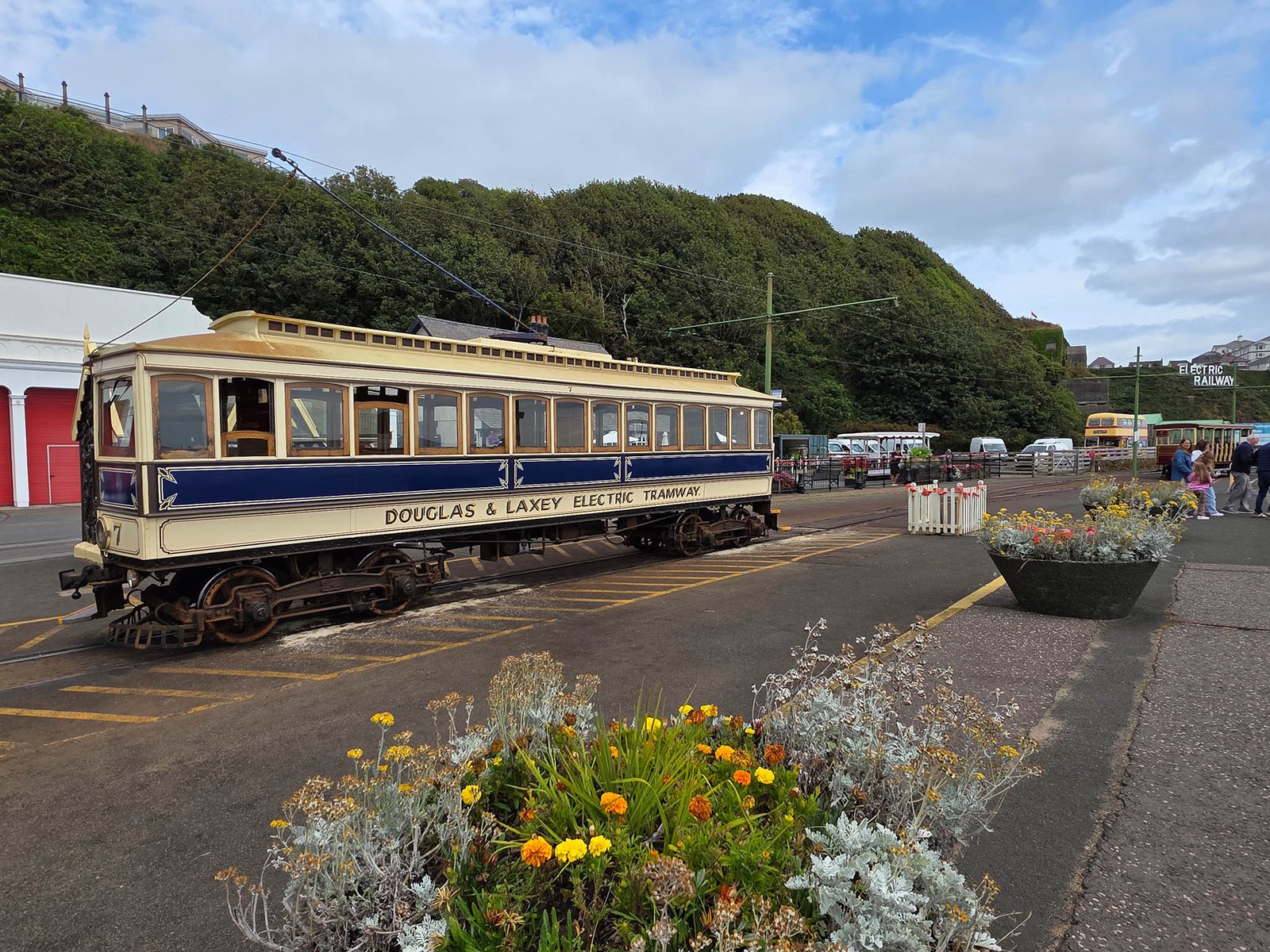
Electric tram at Derby Castle.
INTERESTING FACT
Dating from 1876, the Douglas horse tram is Britain’s oldest surviving horse tramway.
Snaefell Mountain Railway
Laxey was our next port of call, but we travelled by car, where we joined the train heading to the roof of the isle.
Snaefell is the island’s only mountain and at 2,036 feet above sea level, you’re greeted with spectacular views. On a very clear day, you can see parts of all four countries of the UK. Although we couldn’t see that far, it was still a fine view when we reached the top.
With around half an hour before the next train would take us back down, we grabbed a coffee from the café and wandered around the summit.
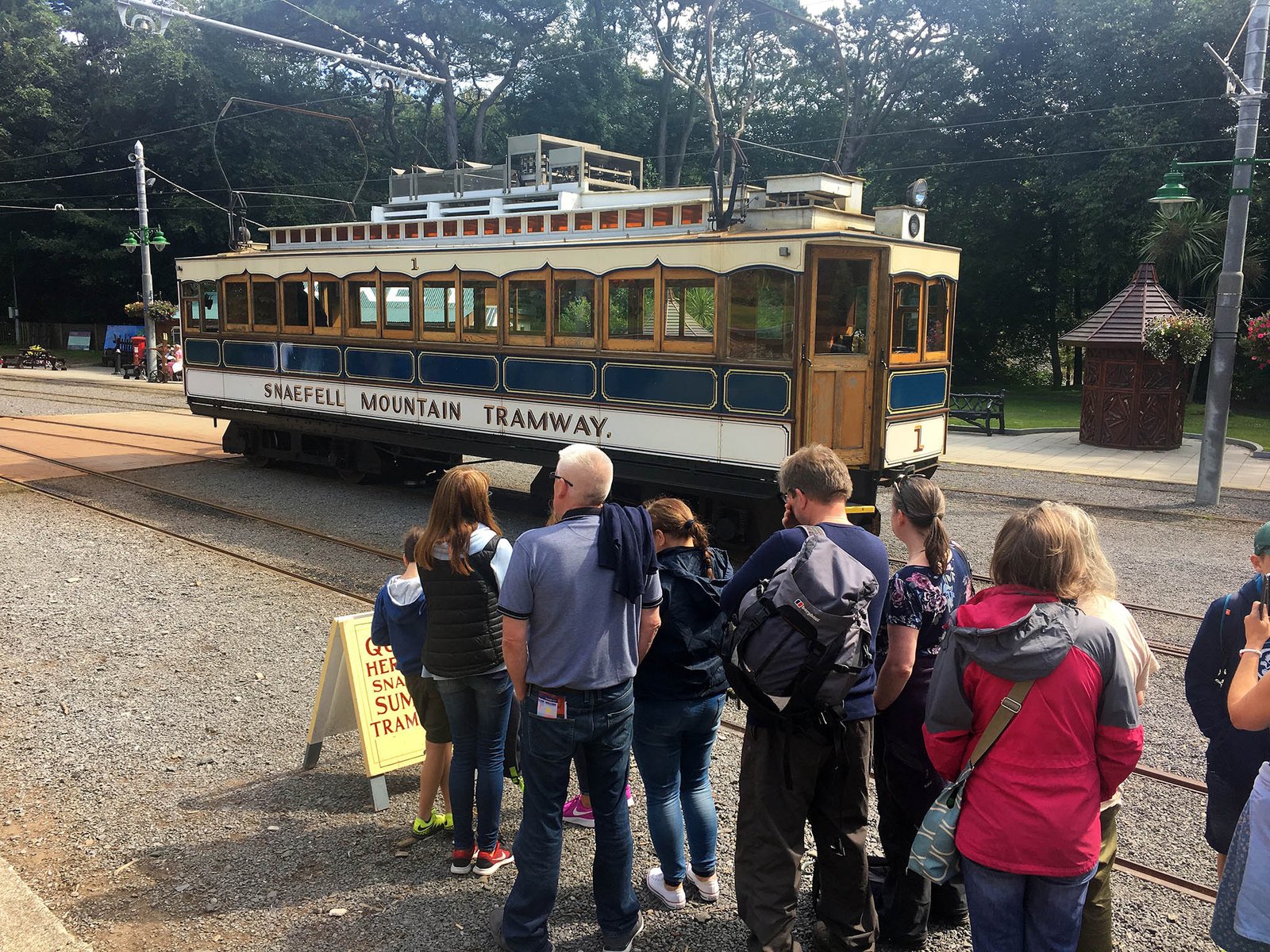
All aboard at Laxey for the roof of the isle.
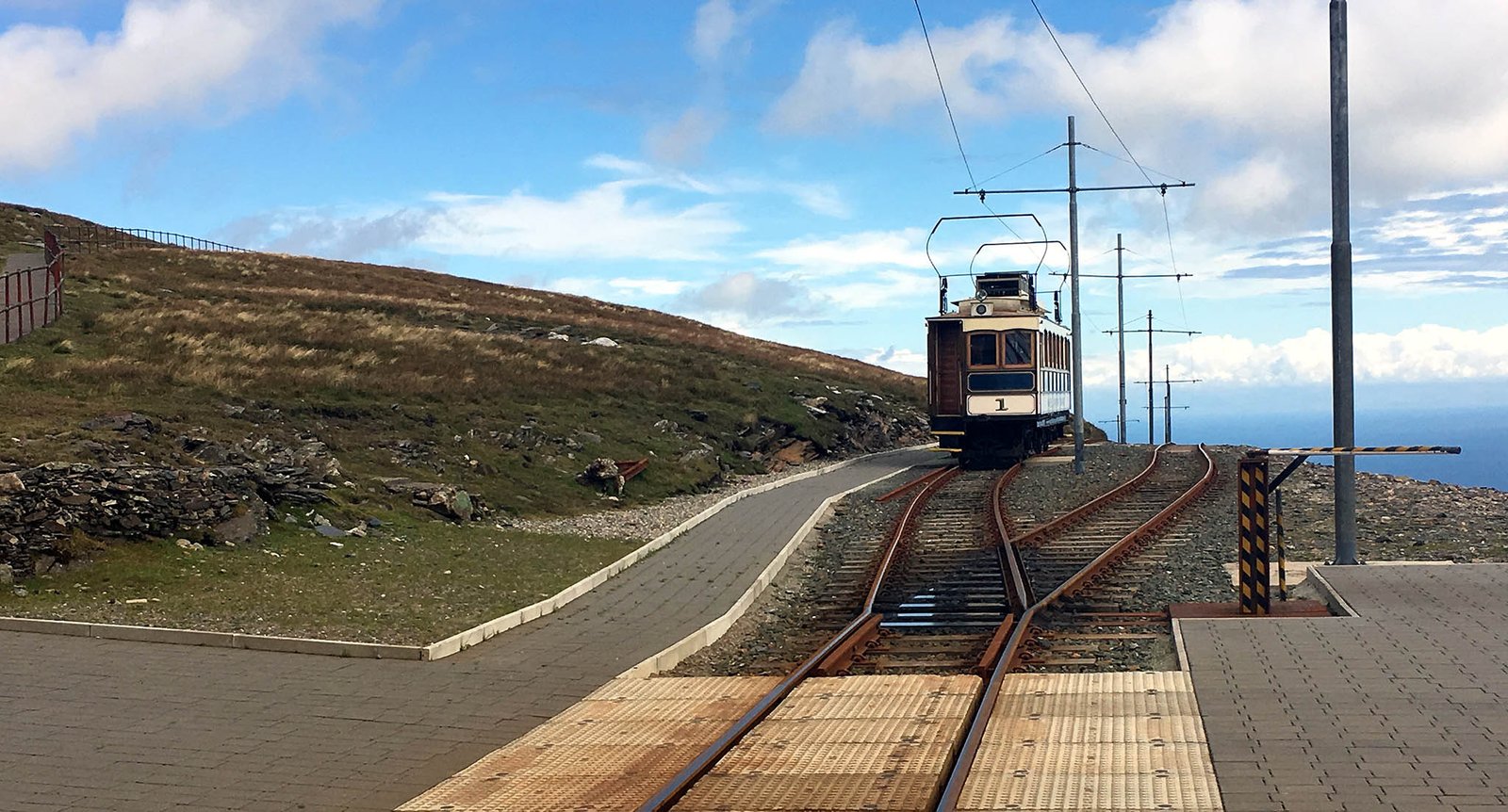
Tram No. 1 arrives at the summit.
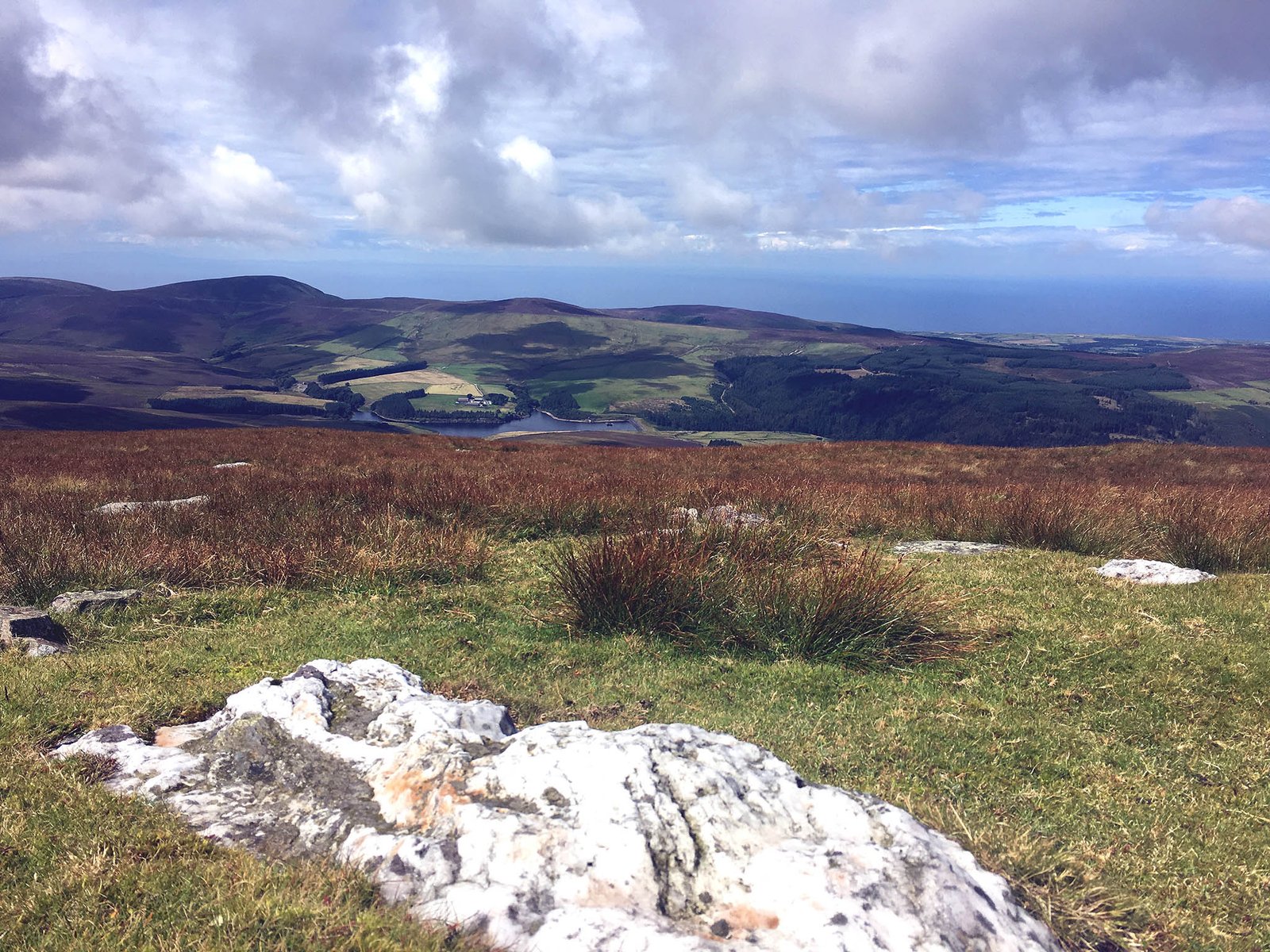
Moorland and sea from 2,036 feet.
INTERESTING FACT
This 3.5-foot gauge railway, winding from the village to the summit, took just seven months to build.
The Great Laxey Wheel
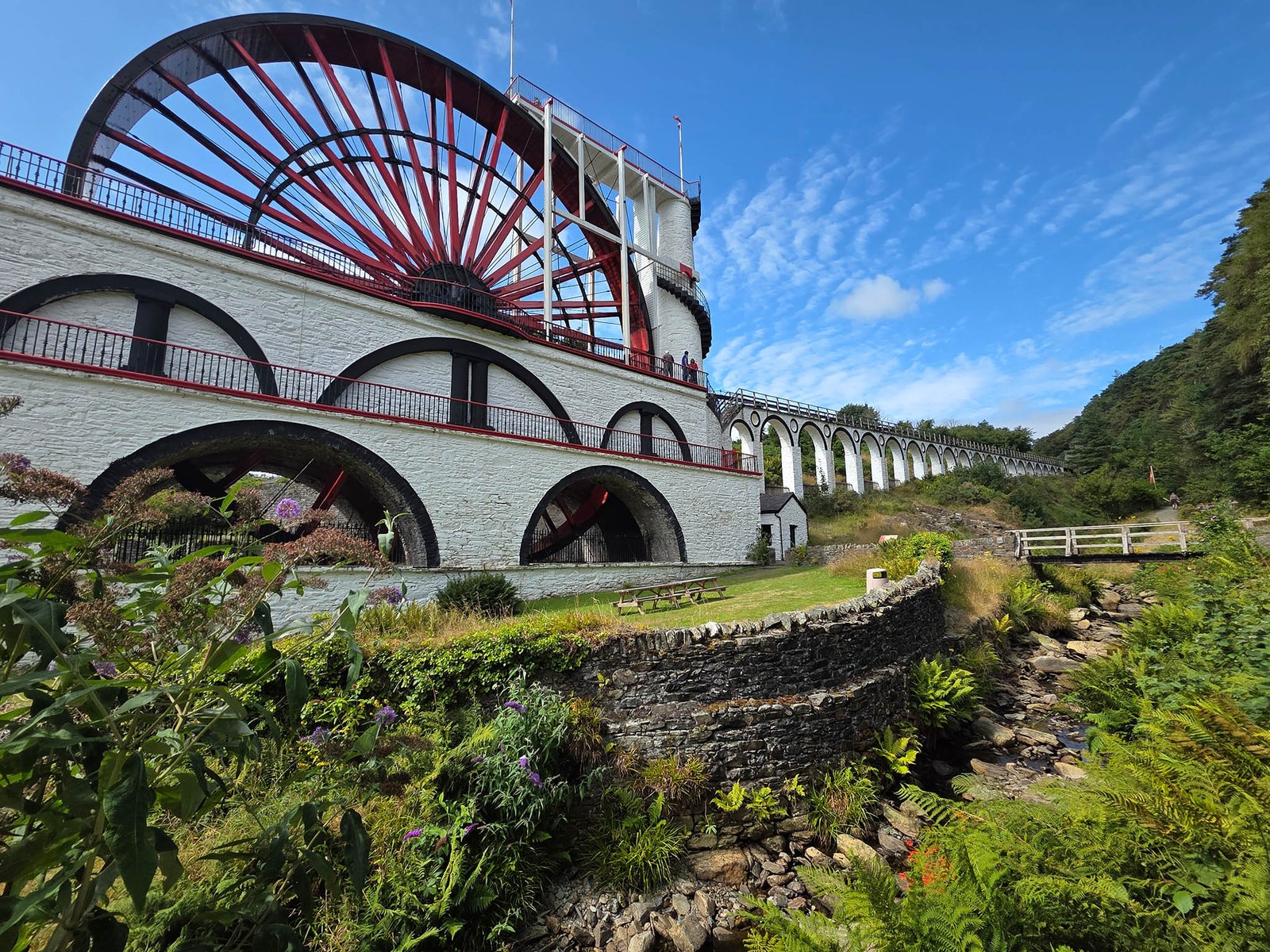
Arriving back at Laxey, we had one more place to visit – the Great Laxey Wheel, officially named Lady Isabella.
Apparently, it’s the world’s largest working waterwheel and was built in the 1850s to pump water from the lead and zinc mines, which reached depths of over 2,000 feet. Although the mines closed in the 1920s, the striking red and white wheel still turns.
Thankfully, we’re OK when it comes to heights so climbed the narrow steps to a viewing platform for a real sense of the wheel’s enormity and to see the picturesque scenery surrounding us.
INTERESTING FACT
Lady Isabella is the world’s largest working waterwheel.
Point of Ayre
Our day’s journey continued via Ramsey to Point of Ayre, the most northerly tip and closest point to the UK, just 16 miles away. Standing here, we were closer to Burrow Head in Scotland than Douglas!
With plenty of free parking space, we got out and enjoyed walking by the lighthouse, huge fog horn and across the shingle beach whose appearance constantly changes due to strong offshore currents disturbing the shingle.
Our long day of exploring had started in the far south with seals sprawled over the rocks and, again, we delighted at seeing more, this time swimming close to shore.
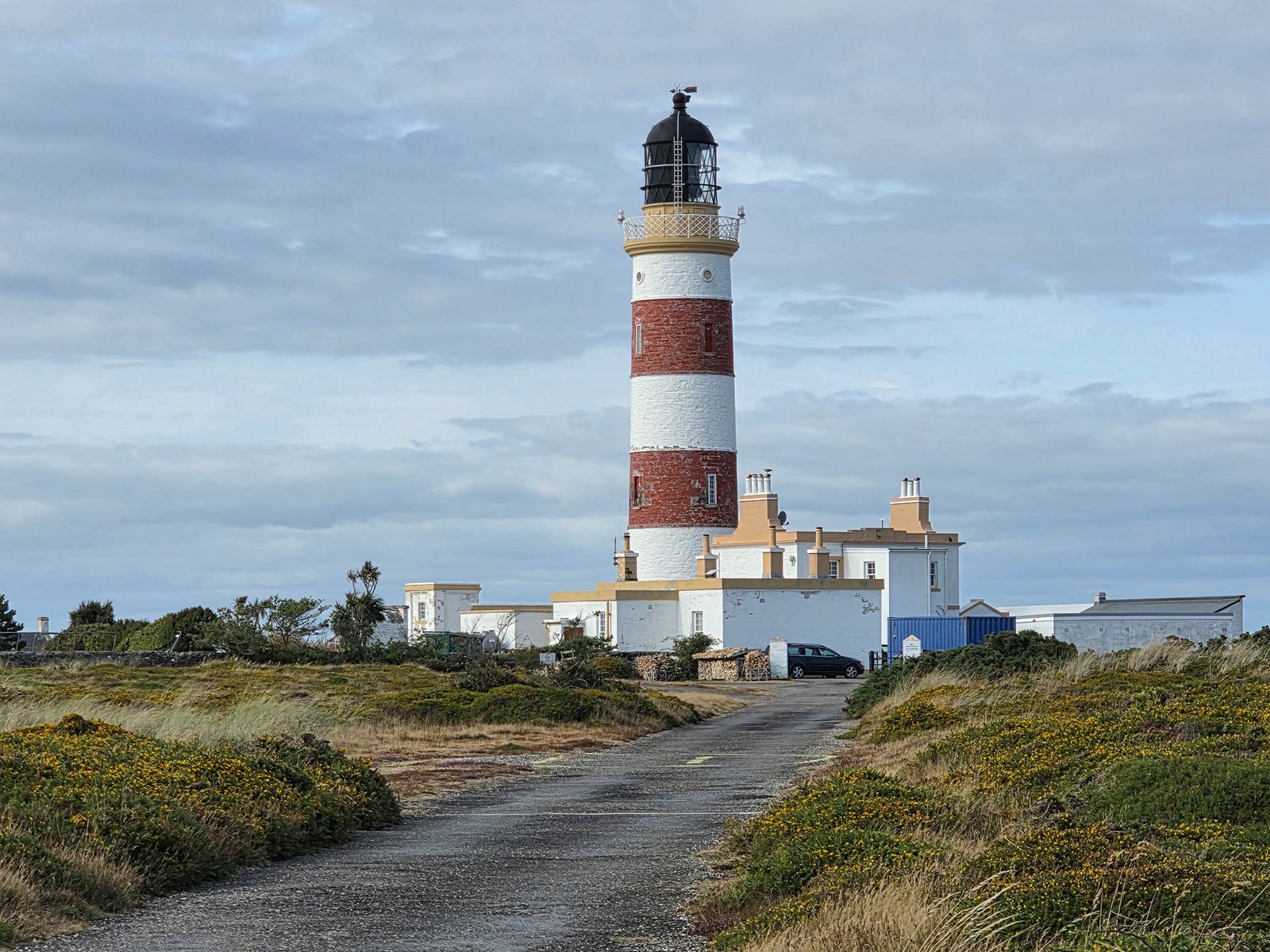
Point of Ayre lighthouse.
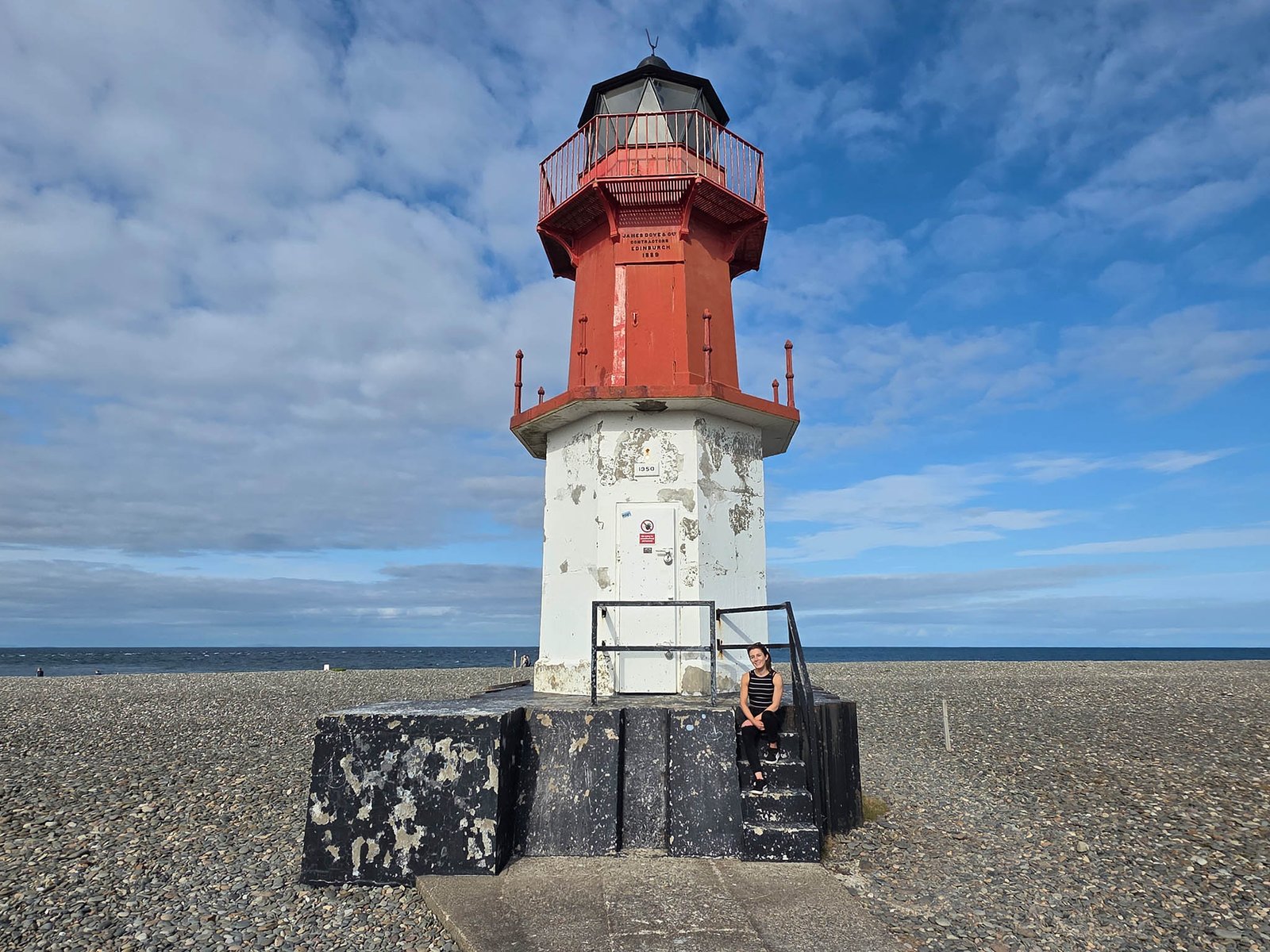
The ever-shifting shingle beach at the island’s northern tip.
INTERESTING FACT
The lighthouse was automated in 1993, while the fog horn was decommissioned 12 years later.
The A18 Mountain Road
It was time to return to our cottage in the south and we couldn’t have asked for a more scenic drive back.
At Ramsey, we joined the A18, a mountain road forming part of the world-famous TT course. Each year, this two-week motorbike racing event attracts thousands of visitors from around the globe.
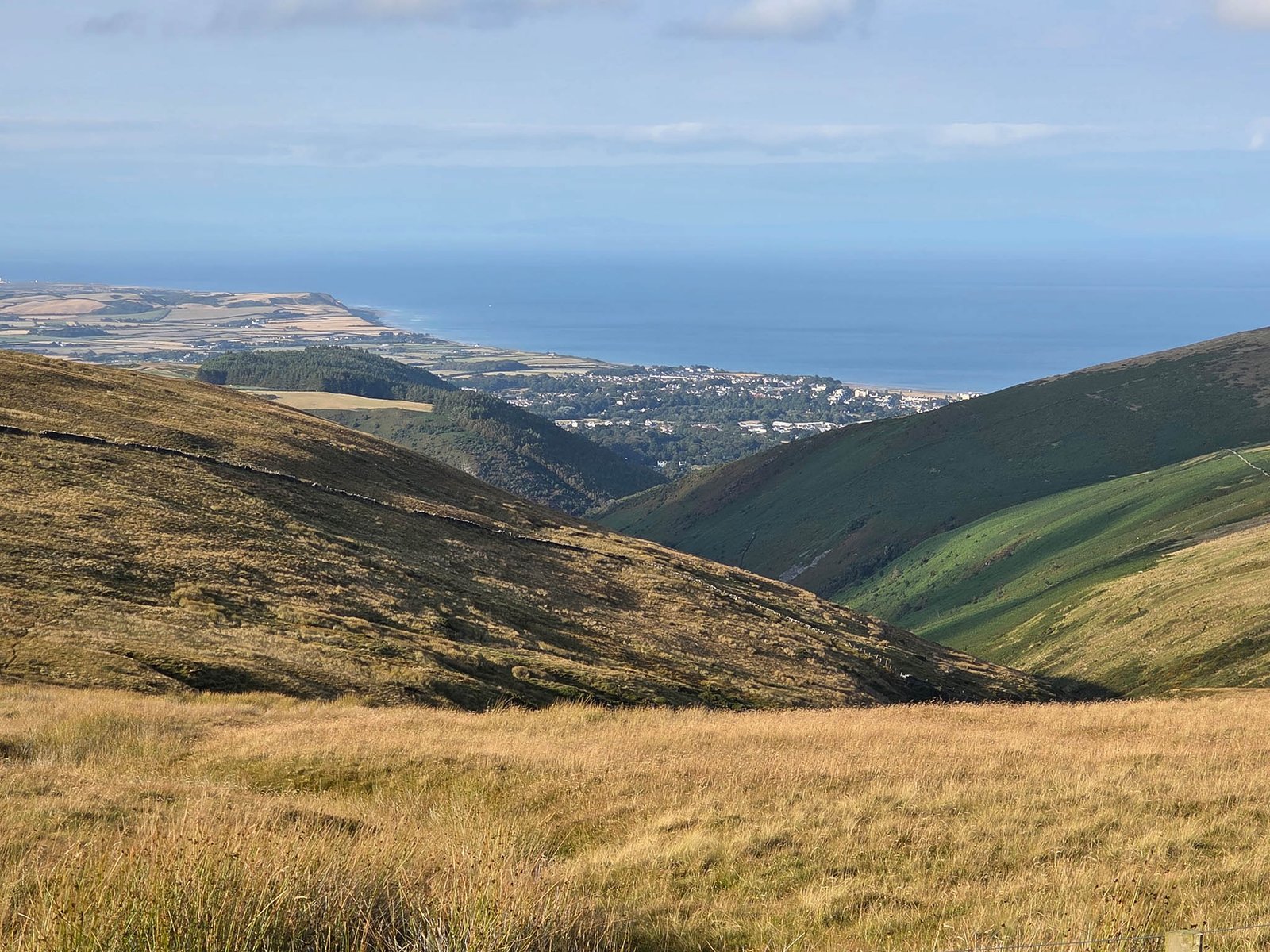
The A18 has its fair share of sweeping bends as it climbs to over 1,300 feet but there were plenty of opportunities to feast our eyes on the wonderful rolling upland moors and Irish Sea beyond.
INTERESTING FACT
The Isle of Man TT was first staged in 1907.
Cregneash & Peel
After such a busy start to our break, we took things a little slower the following day, beginning with a wander around Cregneash, a village comprising a scattering of white-washed buildings showcasing 19th century crofting life.
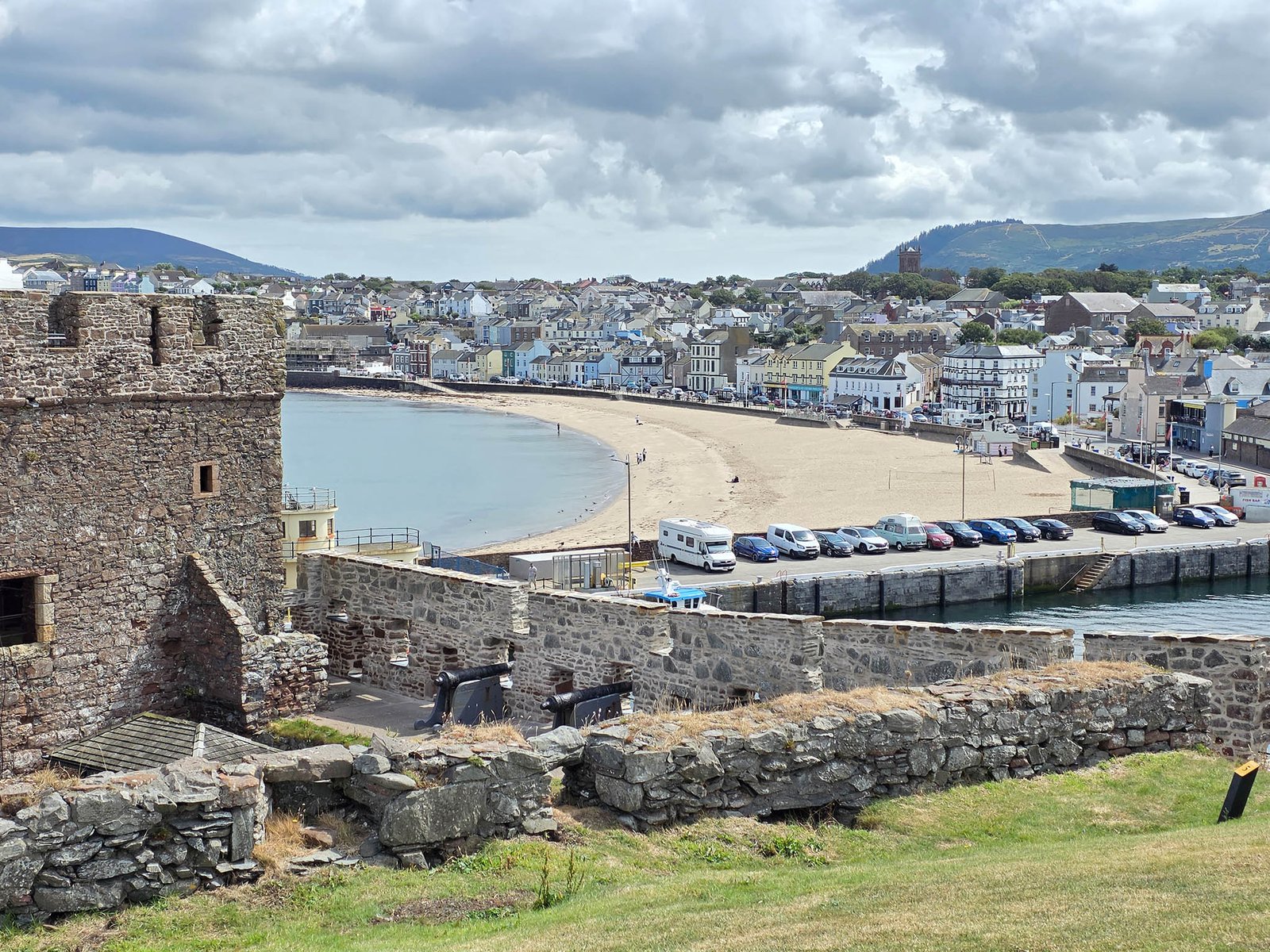
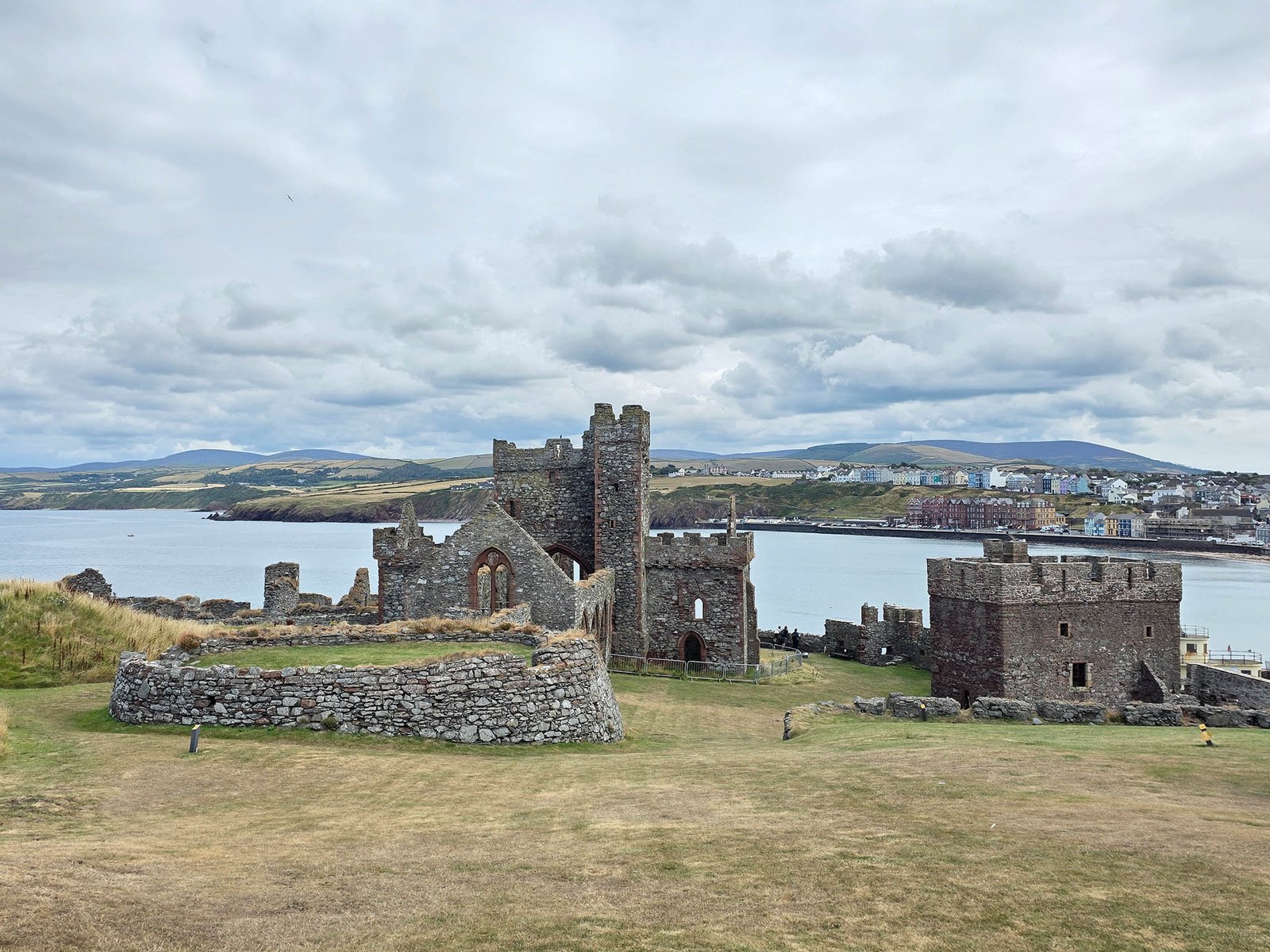
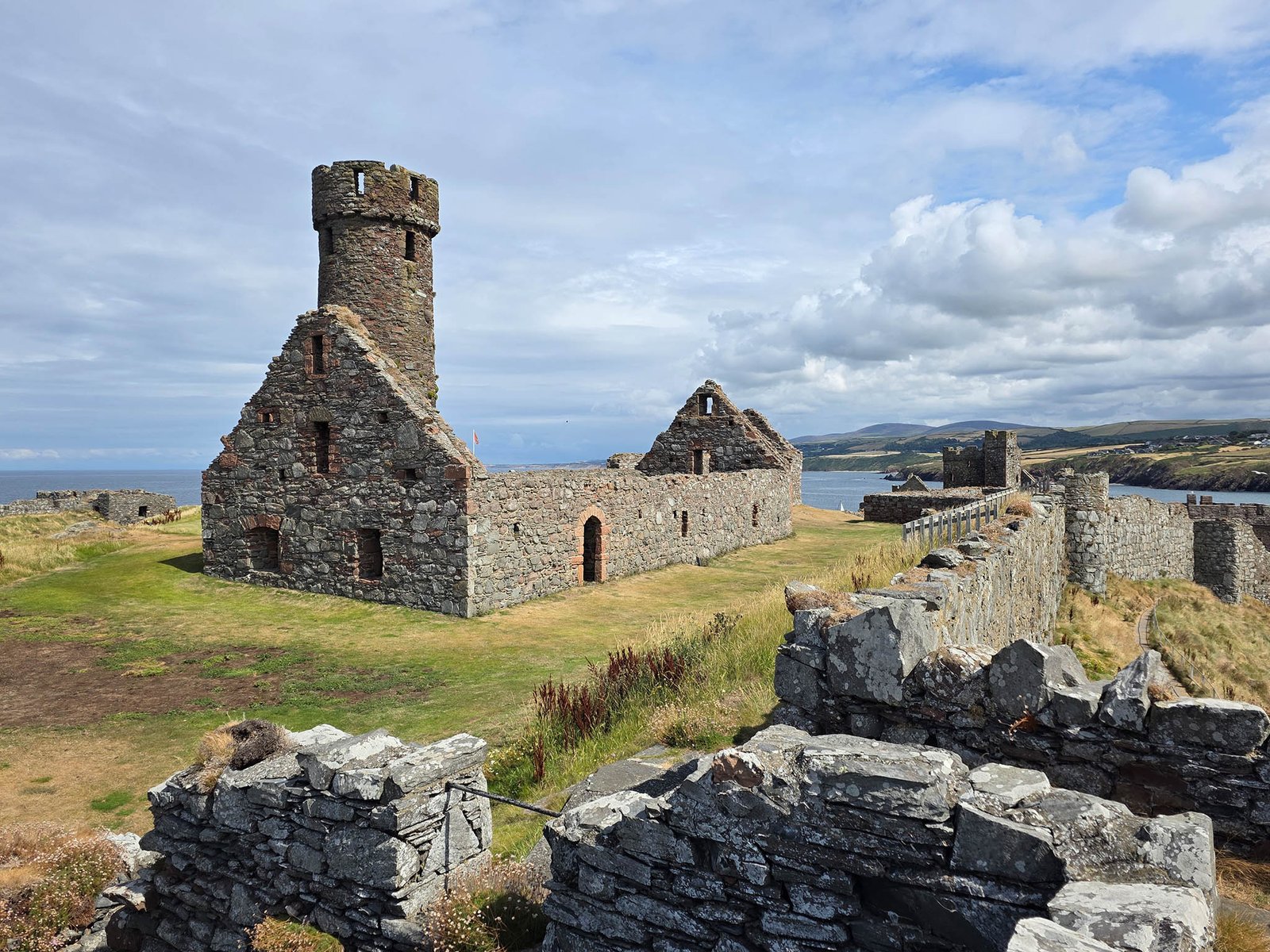
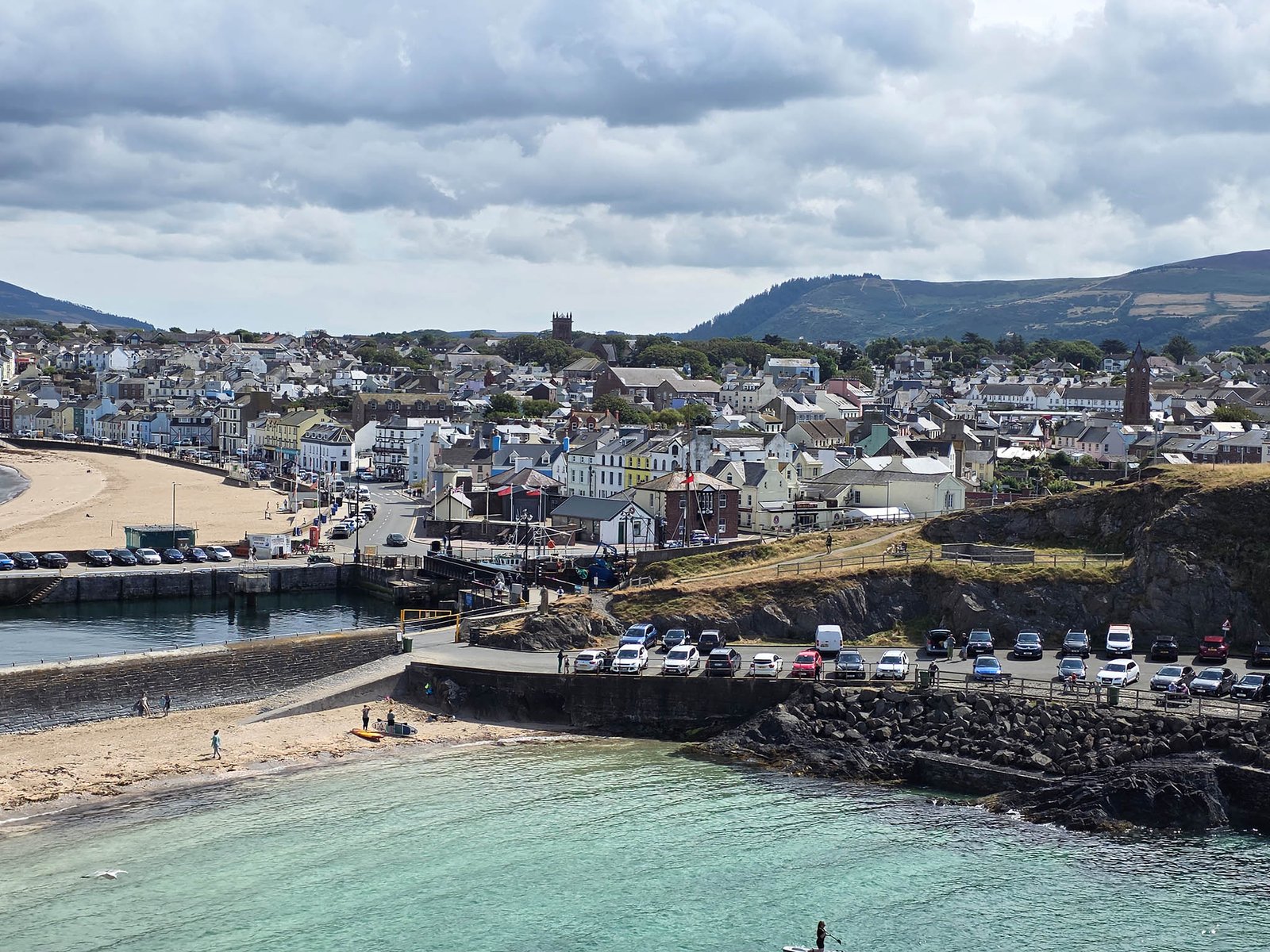
Next, we headed a few miles up the west coast to Peel which boasts, among other attractions, a sandy beach and Viking-built castle overlooking the town.
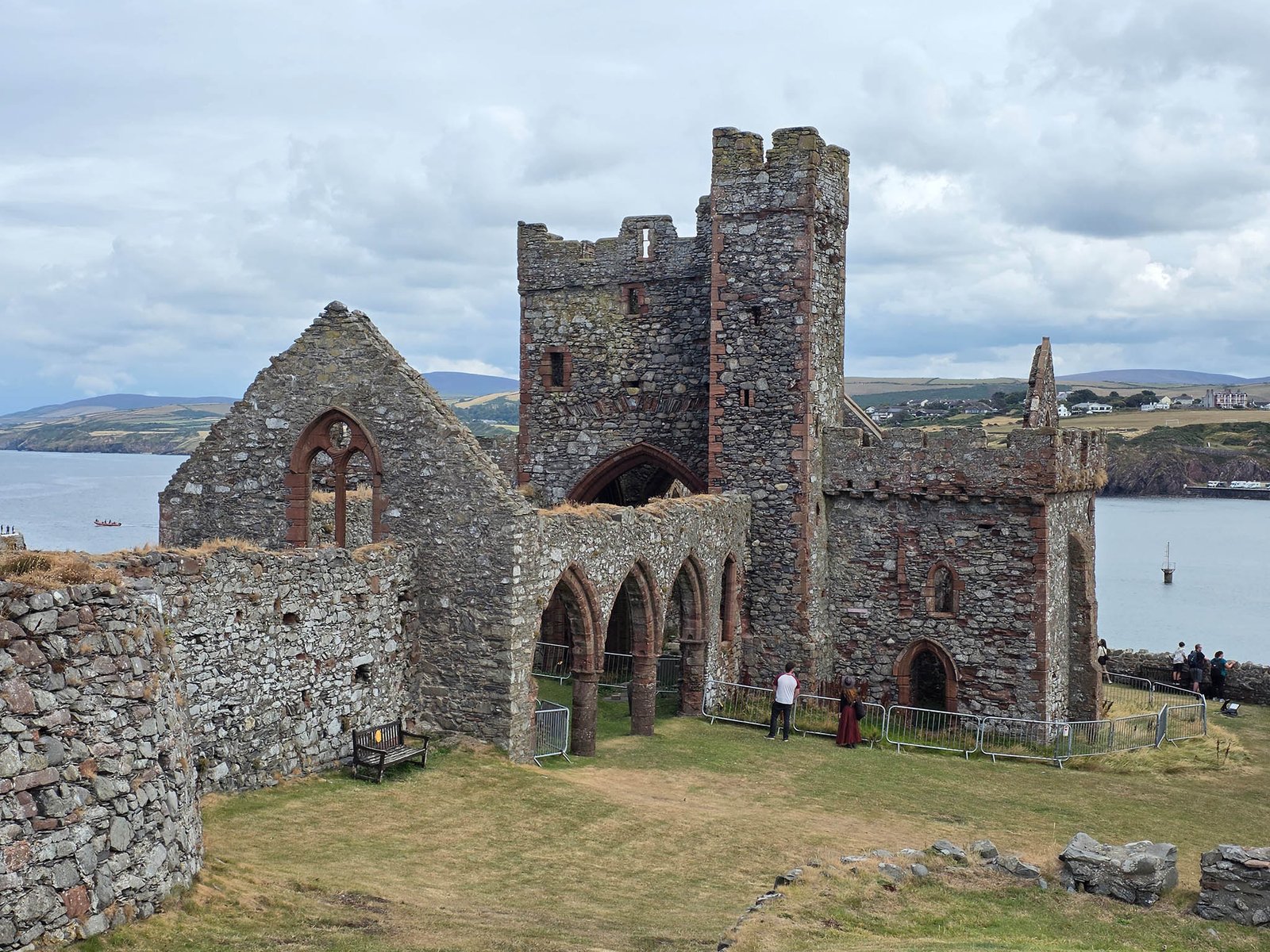
This fortress on St Patrick’s Isle, a rocky islet connected to the mainland by a causeway, was the centre of the island’s government for over two centuries until the seat of power switched to Castle Rushen at Castletown and, ultimately, Douglas.
After wandering around the castle ruins, we burnt off a few calories by walking up Peel Hill to a folly for yet more fine views.
The trouble with the Isle of Man is that there are so many places of interest, it’s difficult choosing which ones to visit.
INTERESTING FACT
Peel Castle was the seat of the island’s government for over two centuries.
FINAL EVENING
Under the stars at The Sound
When it came to our final evening, we knew exactly what we were going to do. We waited for darkness to fall before driving the short distance from our cottage to revisit the isle’s southernmost point.
Sitting on a bench at The Sound, we spent an age looking in awe at the vast star-lit sky. The silence was broken only by the sigh of the wind and murmur of the sea lapping against rocks below.
Being able to experience this moment marked the perfect way to end what had been an enjoyable few days on this truly special island.
26
registered Dark Sky Discovery Sites – the highest concentration in the British Isles. The Sound is among them.
Getting there
BY AIR
Flights operate from many UK airports. We travelled from Bristol.
BY SHIP
The Isle of Man Steam Packet Company operates ferries to Douglas from Heysham, Liverpool and Larne.
MORE INFORMATION
ABOUT THE ISLAND
Tourist information centre:
Tel: 01624 686801
SELF-CATERING
Island Escapes:
Tel: 01624 830200
AIRPORT PARKING & HOTELS
APH.com offers a wide range of parking and overnight hotel stays at all major UK airports.
[Visited: August 2026]
Leave A Comment